
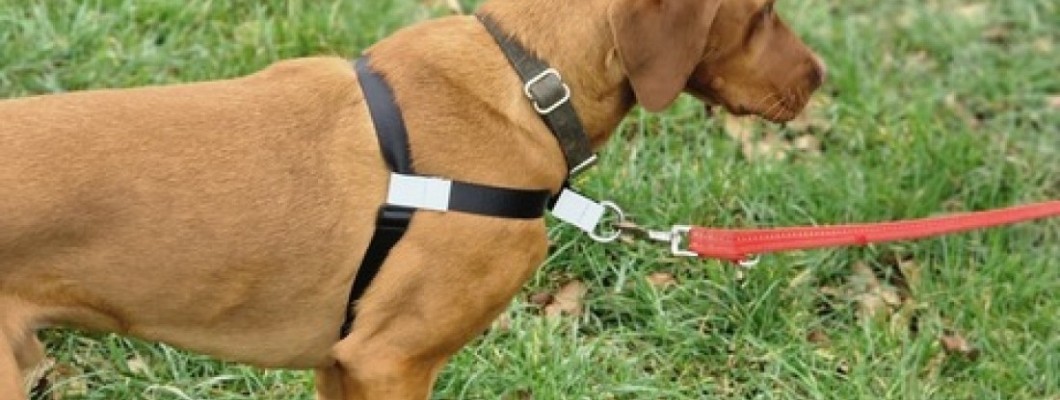
How to Stop Your Dog Pulling on the Lead Using a Front-Clip Harness
Practical loose lead walking advice from Keith Fallon, Master Dog Trainer & Canine Behaviourist.
Walking your dog should be enjoyable, but when your dog constantly pulls ahead, lunges towards interesting smells or drags you towards other dogs, even a short walk can become exhausting.
If you've tried changing leads, stopping every few steps or using treats without much success, you're certainly not alone.
Having worked with thousands of dogs and their owners over more than 20 years, I've found that one of the biggest problems is that dogs often learn that pulling gets them exactly where they want to go.
In this guide, I'll explain how front-clip harnesses work and share a simple, practical training method you can start using on your next walk.
Why Do Dogs Pull on the Lead?
Before trying to stop pulling, it's worth understanding why it happens.
Dogs experience the world largely through their noses. Every walk brings interesting smells, sounds, other dogs, people and opportunities to investigate.
Common reasons for pulling include:
- Excitement: Your dog wants to reach something interesting as quickly as possible.
- Habit: Pulling has worked in the past, so your dog continues doing it.
- Different walking speeds: Most dogs naturally move faster than we do.
- Distractions: Other dogs, wildlife, people or traffic can make concentration difficult.
- Lack of training: Your dog may never have learnt what walking on a loose lead means.
One of the first things I explain to owners is that pulling isn't necessarily disobedience.
Quite often, the dog has simply learnt a behaviour that gets results. Our job is to teach a different behaviour that's equally rewarding.
How Does a Front-Clip Dog Harness Help with Pulling?
A conventional back-clip harness attaches the lead between the dog's shoulders. While these harnesses can be perfectly suitable for many dogs, some enthusiastic pullers find it easy to lean forward against the lead.
A front-clip dog harness works differently.
The lead attaches to a ring positioned at the front of the dog's chest.
When the dog pulls forward, the position of the lead attachment can help redirect their movement rather than allowing them to drive straight ahead against the handler.
This may give the owner more directional control while avoiding direct lead pressure on the dog's neck.
However, it's important to understand that a front-clip harness is not an automatic cure for pulling.
An appropriate fit, calm handling and consistent training are still essential.
For more detail, read our front-clip vs back-clip dog harness comparison.
My Five-Step Method for Calmer Lead Walking
This is a straightforward approach I have used and recommended when helping owners improve their dogs' lead walking.
Step 1: Start Somewhere Quiet
One of the biggest mistakes owners make is trying to teach loose lead walking in an environment full of distractions.
If your dog becomes excited whenever they see another dog, there's little point expecting perfect lead walking in a busy park straight away.
Start somewhere easier.
Your garden, a quiet driveway or a peaceful stretch of pavement can be ideal.
The aim is to give your dog the best possible chance of succeeding before gradually introducing more difficult situations.
Step 2: Fit the Harness Correctly
Before you begin, make sure your harness fits securely and comfortably.
The front attachment should sit centrally on the chest, and the straps should not rub, slip excessively or restrict your dog's natural movement.
You should generally be able to fit two fingers beneath the straps, although fit also depends on your dog's shape and the harness design.
Attach a suitable fixed-length lead to the front ring.
Avoid keeping the lead permanently tight. Your dog needs an opportunity to learn what a relaxed lead feels like.
Step 3: Reward the Position You Want
Start walking slowly.
Whenever your dog is walking near you with a relaxed lead, quietly praise them and offer a small reward.
You don't need to insist on a formal heel position.
For most everyday walks, I simply want a dog that can walk comfortably with its owner without constantly pulling.
Reward your dog for:
- Walking with a loose lead.
- Checking in with you voluntarily.
- Responding when you change direction.
- Staying calm when something interesting appears.
Over time, the dog begins to associate staying near you with positive outcomes.
Step 4: Don't Let Pulling Become the Reward
This is probably one of the most important parts of the process.
Imagine your dog sees an interesting smell several metres ahead.
They pull towards it, you follow, and they reach the smell.
From the dog's perspective, pulling worked perfectly!
Instead, when the lead becomes tight, stop moving forward.
Wait for your dog to ease the tension or turn their attention towards you.
Then reward that response and begin walking again.
You can also calmly change direction if necessary, guiding your dog without jerking or dragging them.
Be patient. You're changing a habit that may have been reinforced for months or years.
Step 5: Gradually Introduce Distractions
Once your dog is walking well in a quiet location, gradually make things more challenging.
Try somewhere with a few additional smells, people or dogs at a comfortable distance.
If your dog becomes too excited to listen, you've probably increased the difficulty too quickly.
Move farther away from the distraction and practise again.
In my experience, one of the most effective things an owner can do is recognise when an environment has become too challenging and make the exercise easier.
Short, successful sessions are usually far more valuable than a long, frustrating walk.
What If Your Dog Lunges Towards Other Dogs?
This is a common situation, and it's where owners often discover the limitations of equipment alone.
A front-clip harness can help you manage your dog's movement, but lunging may be caused by excitement, frustration, fear or a combination of factors.
You need to understand why your dog is reacting before deciding how best to address it.
If distractions are causing serious problems, increase your distance and return to practising in a calmer environment.
For dogs with reliable recall training, a suitable long training line can also be useful in safe, appropriate open spaces, although it should not be used to allow high-speed lunging against a front-clip harness.
Don't repeatedly put your dog into situations where they become so excited or worried that they can no longer respond to you.
For significant fear, aggression or persistent reactivity, seek help from a suitably qualified, reward-based behaviour professional.
Why I Developed the GentleStep Front-Clip Dog Harness
Over the years, I've worked with many different harness designs and seen what works well for everyday owners.
I wanted a harness that was practical, comfortable and straightforward to use, without unnecessary complications.
That led to the development of the GentleStep Front-Clip Dog Harness, made here in the UK.
GentleStep uses a front chest attachment to help owners guide their dogs during walks, while avoiding direct lead pressure on the neck.
Its design includes:
- A front D-ring attachment to help manage forward pulling.
- A simple, lightweight strap design.
- An adjustable fit.
- A single buckle for straightforward fastening.
- Reflective detailing for visibility.
- UK manufacture.
I designed GentleStep as a practical walking aid that could work alongside the training methods I've used throughout my career.
It isn't intended to replace training or guarantee that every dog will immediately stop pulling.
Instead, the aim is to make everyday walks more manageable while owners teach their dogs better walking habits.
Discover the GentleStep Dog Harness
Designed from over 20 years of practical dog training experience and made in the UK.
Shop GentleStep HarnessFront-Clip Harness vs Back-Clip Harness: Which Is Better?
Both designs have their place.
A back-clip harness can work very well for dogs that already walk comfortably on a loose lead.
For dogs that frequently pull ahead, a well-fitted front-clip harness may provide better directional control.
The most suitable choice depends on your dog's size, shape, behaviour, comfort and individual needs.
I've also written a separate guide explaining the differences:
Front Clip vs Back Clip Dog Harness: Which Is Better for Your Dog?
How Long Does It Take to Stop a Dog Pulling?
There's no fixed answer.
Some dogs respond quickly when owners change their handling and reward the right behaviour.
Others need several weeks or longer, especially if they've spent years practising pulling or find the outside world particularly exciting.
The biggest factors are consistency, appropriate training environments and the dog's individual behaviour.
My advice is to focus on small improvements.
Perhaps your dog can initially walk only ten relaxed steps before becoming distracted.
That's a perfectly reasonable starting point.
Build on those successes rather than expecting perfection from the first session.
Frequently Asked Questions
Do front-clip harnesses really work for dogs that pull?
They can help some owners manage pulling by changing the lead's point of attachment and providing more directional control. However, they work best alongside reward-based loose lead training.
Will a front-clip harness stop my dog pulling immediately?
Not necessarily. Some dogs show an immediate improvement in manageability, while others need time and training to change their walking habits.
Are front-clip harnesses suitable for strong dogs?
They can be, provided the harness is appropriately sized, secure and comfortable. Very strong or reactive dogs may require additional management and professional training support.
Can I use a front-clip harness every day?
A properly fitted harness designed for walking can be used for daily supervised walks. Check regularly for rubbing, wear or loosening straps, and remove it when not needed.
Should I use a retractable lead with a front-clip harness?
For teaching loose lead walking, I generally recommend a suitable fixed-length lead. It provides clearer handling and helps avoid the variable tension associated with retractable leads.
Final Thoughts: Better Walks Come from Better Habits
If there's one lesson I've learnt from more than two decades of helping owners with their dogs, it's that good equipment and good training should work together.
A front-clip harness can make pulling easier to manage, but the lasting improvement comes when your dog learns that walking calmly alongside you is rewarding.
Start somewhere quiet, practise regularly, reward the behaviour you want and gradually build up to more distracting environments.
Most importantly, enjoy the process.
A calmer walk isn't just about getting from one place to another. It's about developing better communication and a more enjoyable relationship with your dog.
Ready for More Manageable Walks?
Discover GentleStep, the UK-made front-clip dog harness developed from over 20 years of practical dog training and behaviour experience.
Explore GentleStepAbout the Author
Keith Fallon is a Master Dog Trainer and Canine Behaviourist with more than 20 years of practical experience helping dogs and their owners. He is the creator of the GentleStep Dog Harness and founder of Cotswold Pet Supplies.
His approach focuses on understanding canine behaviour, practical training and helping owners enjoy calmer, more comfortable walks.
Leave a Comment