

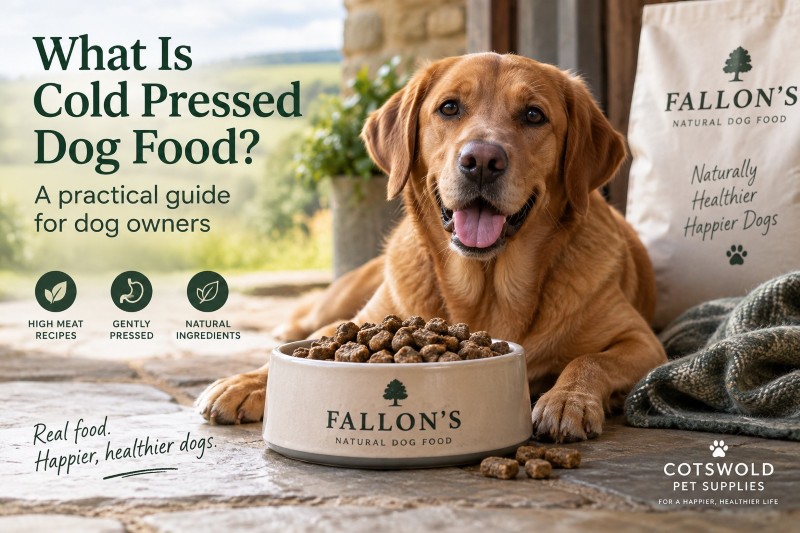
Cold pressed dog food is a complete dry dog food made using a different manufacturing process from traditional extruded kibble. The ingredients are mixed and pressed into pieces using lower processing temperatures than conventional extrusion, creating a dense, easy-to-feed dry food.
For dog owners, the important question is not simply whether a food is cold pressed, but what ingredients are in it, whether it suits your dog, and whether it provides complete and balanced nutrition.
At Cotswold Pet Supplies, we offer a range of Fallon’s Cold Pressed Dog Foods, including everyday grain-free recipes, specialist options and our newer high-meat 80:20 recipes.
How Is Cold Pressed Dog Food Different From Normal Kibble?
Most conventional dry dog food is produced using a process called extrusion. The ingredients are mixed, cooked and formed into kibble under heat and pressure.
Cold pressed food is manufactured differently. The ingredients are combined and gently pressed into shape rather than being produced using the same high-temperature extrusion process.
This creates a food that looks and feels slightly different from ordinary kibble. Cold pressed pieces are generally denser and may break apart more easily.
It is still a dry, complete dog food and can be stored and fed in much the same way as traditional kibble.
Is Cold Pressed Dog Food Raw?
No. Cold pressed dog food is not the same as feeding a raw diet.
It offers the convenience of a dry food while allowing manufacturers to create recipes containing high levels of animal ingredients.
This is why cold pressed food is sometimes described as an alternative for owners who like the idea of a high-meat diet but do not want the storage, preparation and handling involved with raw feeding.
Our newer Fallon’s 80:20 Cold Pressed range, for example, contains around 80% total animal ingredients while remaining a convenient dry food.
What Does 80:20 Cold Pressed Dog Food Mean?
h1 What Is Cold Pressed Dog Food A Practical GuiThe term 80:20 refers to the proportion of animal ingredients within these particular Fallon’s recipes.
Our current 80:20 range includes:
- 80:20 Chicken – 76% chicken and more than 80% total animal ingredients
- 80:20 Duck – 70% duck and more than 80% total animal ingredients
- 80:20 Trout – 73% trout and 80% total animal ingredients
- 80:20 Beef – 70% beef and 80% total animal ingredients
These recipes are considerably higher in protein than many traditional dry foods, so they are nutrient-dense foods rather than simply another type of kibble.
What Are the Benefits of Cold Pressed Dog Food?
There is no single type of dog food that is automatically best for every dog. However, cold pressed food can offer several practical advantages.
High-Meat Recipes Are Available
Cold pressing works particularly well for high-meat formulations. The Fallon’s 80:20 recipes contain high levels of chicken, duck, trout or beef and provide a convenient option for owners looking for a meat-rich dry food.
Convenient to Store and Feed
Unlike fresh or raw food, cold pressed dog food does not normally require freezer storage or preparation before feeding.
You can weigh out the daily allowance in much the same way as conventional dry food.
Different Protein Choices
Cold pressed recipes are available with different animal proteins, which gives owners more choice when finding a recipe their dog enjoys.
Within the Fallon’s range you can choose from proteins including chicken, lamb, salmon, turkey, duck, trout and beef.
Specialist Recipes
Cold pressed food does not have to be a one-size-fits-all diet.
Our range includes recipes developed for different feeding requirements, including:
- everyday adult feeding
- weight management
- higher-fibre feeding
- grain-free feeding
- high-meat 80:20 feeding
- recipes containing additional herbs and functional ingredients
What Ingredients Should I Look for in a Cold Pressed Food?
I always recommend looking beyond the words cold pressed on the front of the bag.
Look at the actual composition.
Useful things to check include:
- the named animal protein and percentage
- the overall protein and fat levels
- the carbohydrate source
- whether the food is grain-free if that is important to you
- added oils such as salmon oil
- prebiotic ingredients
- additional joint-support ingredients where appropriate
A dog food should also be clearly identified as a complete food if it is intended to provide your dog's entire everyday diet.
Is Cold Pressed Dog Food Good for Sensitive Dogs?
Some owners choose cold pressed food when looking for a different recipe for a dog with a sensitive digestive system.
However, the fact that a food is cold pressed does not automatically make it suitable for every sensitive dog.
The individual ingredients matter more.
For example, you may need to consider:
- which animal proteins your dog has eaten previously
- whether the recipe contains grain
- the fat level
- how complex the ingredient list is
- your dog's previous response to different foods
If your dog has persistent digestive problems, skin problems, unexplained weight loss or other health concerns, it is sensible to speak to your vet before making significant dietary changes.
Is Cold Pressed Food Better Than Kibble?
I would not describe cold pressed food as automatically “better” than every traditional kibble.
There are excellent and poor-quality foods made using many different manufacturing methods.
A better question is:
Does this particular recipe suit my dog?
A well-formulated conventional dry food can work extremely well for one dog, while another owner may prefer a cold pressed recipe because of its ingredients, protein source or feeding style.
Does Cold Pressed Dog Food Expand in the Stomach?
You may see claims online that conventional kibble swells dramatically in the stomach whereas cold pressed food simply dissolves.
I would be cautious about making feeding decisions based on demonstrations involving food dropped into glasses of water.
A dog's digestive system is far more complex than a glass of water.
The more useful considerations are the quality of the recipe, how much you feed, whether your dog digests it comfortably and whether your dog maintains good body condition.
How Do I Change My Dog to Cold Pressed Food?
When changing food, I generally recommend making the change gradually rather than replacing the old food overnight.
A simple transition could look like:
- Days 1–2: mostly existing food with a small amount of the new food
- Days 3–4: increase the proportion of new food
- Days 5–6: mostly new food
- Day 7 onwards: move fully onto the new recipe if your dog is doing well
Some dogs may need a slower transition.
Watch your dog's stools, appetite and general condition during the change.
How Much Cold Pressed Dog Food Should I Feed?
Because some cold pressed foods are nutritionally dense, the quantity needed may be different from your dog's previous food.
Do not assume that the same scoop or cup measurement will provide the same calories.
Start with the feeding guide for the individual recipe and then adjust according to:
- your dog's weight
- body condition
- age
- activity level
- treat intake
- whether you are trying to maintain, gain or reduce weight
I recommend weighing food in grams rather than relying on a cup or scoop.
Which Fallon’s Cold Pressed Food Should I Choose?
The right recipe depends on the dog rather than simply choosing the food with the highest meat content.
For Everyday Feeding
Our established Cold Pressed Chicken & Sweet Potato, Lamb & Sweet Potato and Salmon & Sweet Potato recipes provide complete grain-free everyday options.
For a High-Meat Diet
Consider the Fallon’s 80:20 range with Chicken, Duck, Trout or Beef.
For Weight Management
Fallon’s Turkey Slim Down provides a lighter cold pressed option with lower fat than many of the higher-meat recipes.
For Dogs Where Additional Fibre Is Useful
Fallon’s Turkey Gastro includes psyllium husks and seeds as an additional fibre source.
For Something Different
Our Turkey recipes and other specialist foods give owners additional choices where a standard chicken-based recipe may not be their preferred option.
Should I Try a Small Bag First?
Yes. Whenever practical, I think trying a smaller quantity before committing to a large bag makes sense.
It gives you an opportunity to see:
- whether your dog likes the food
- how easily they digest it
- whether their stools remain consistent
- whether the recipe fits into your normal feeding routine
You can explore our Fallon’s Trial Bags & Discovery Boxes before committing to a larger bag.
Browse Fallon’s Cold Pressed Dog Food
If you would like to compare the different recipes, visit our Fallon’s Cold Pressed Dog Food range.
You will find everyday grain-free recipes alongside specialist options and the newer high-meat 80:20 range.
Frequently Asked Questions
Is cold pressed dog food a complete food?
It can be. Check the individual product label. Fallon’s cold pressed recipes sold as complete foods are designed to provide the nutrients required for everyday feeding when fed according to the feeding guidelines.
Is cold pressed food the same as raw food?
No. Cold pressed dog food is a dry food and is not the same as feeding fresh or frozen raw meat.
Can I mix cold pressed food with other dog food?
Many owners use more than one type of dog food. The important consideration is ensuring the dog's overall daily diet remains appropriately balanced and that total calorie intake is suitable.
Is cold pressed dog food grain-free?
Not all cold pressed foods are grain-free. Check the individual ingredients. The Fallon’s recipes identified as grain-free do not use grains as their carbohydrate source.
Is cold pressed food suitable for older dogs?
It can be, but the individual dog's calorie requirements, health, activity level and body condition are more important than the manufacturing method alone. A lower-fat or weight-management recipe may be more appropriate for some older dogs.
Can puppies eat cold pressed food?
Puppies need food formulated to meet the nutritional demands of growth. Do not assume that an adult cold pressed recipe is suitable for a growing puppy simply because it is high in meat or protein. Choose a food specifically appropriate for the puppy's life stage.
Keith’s View
After working with dogs and their owners for many years, I try not to get too caught up in feeding trends.
The important question is always whether a particular food works well for the dog in front of us.
Cold pressed food gives owners another useful option. I particularly like the fact that we can offer very different recipes – from lighter turkey foods through to the new high-meat 80:20 range – rather than assuming every dog needs exactly the same thing.
If you are unsure where to start, trying a smaller bag first and monitoring how your dog responds is often the most practical approach.
Leave a Comment